Lawn Aeration in Johnson County, KS
Core aeration relieves soil compaction by removing thousands of small plugs of soil, allowing your lawn to breathe, grow deeper roots, and absorb nutrients more effectively.
Give Your Lawn Room to Breathe
TRANSFORM YOUR LAWN TODAY
FOR THE BEST EXPERIENCE, GIVE US A CALL

Year-Round Lawn Care Programs

Why Aeration Matters
Healthy grass starts below the surface.
Core aeration provides benefits you can see above ground by improving the health of your lawn's root system.
Benefits of Core Aeration
✔ Relieves soil compaction
✔ Improves air, water, and nutrient absorption
✔ Encourages deeper, stronger root growth
✔ Creates a thicker, healthier lawn
✔ Improves drought and heat tolerance
✔ Helps fertilizer work more effectively
✔ Improves water infiltration and may reduce runoff
✔ Creates ideal conditions for overseeding
Why Aeration Is Included in Our Premium Lawn Care Program
Core aeration delivers its best results when combined with consistent seasonal lawn care. That’s why annual core aeration is included in our Premium Lawn Care Program.
Relieves compacted Johnson County clay soil
Helps water, air, and nutrients reach the root zone
Supports deeper roots and stronger turf
Improves the results of seasonal fertilization and weed control
Creates better conditions for overseeding and lawn recovery
Together, these services help produce a thicker, healthier lawn with longer-lasting results.
When Is the Best Time to Core Aerate?
For the cool-season lawns common throughout Johnson County, core aeration is typically performed in early spring or fall while the grass is actively growing. Spring aeration helps relieve compaction before the growing season, while fall aeration pairs especially well with overseeding. Green Hat recommends timing based on your lawn’s soil, condition and overall treatment plan.
What to Expect After Core Aeration
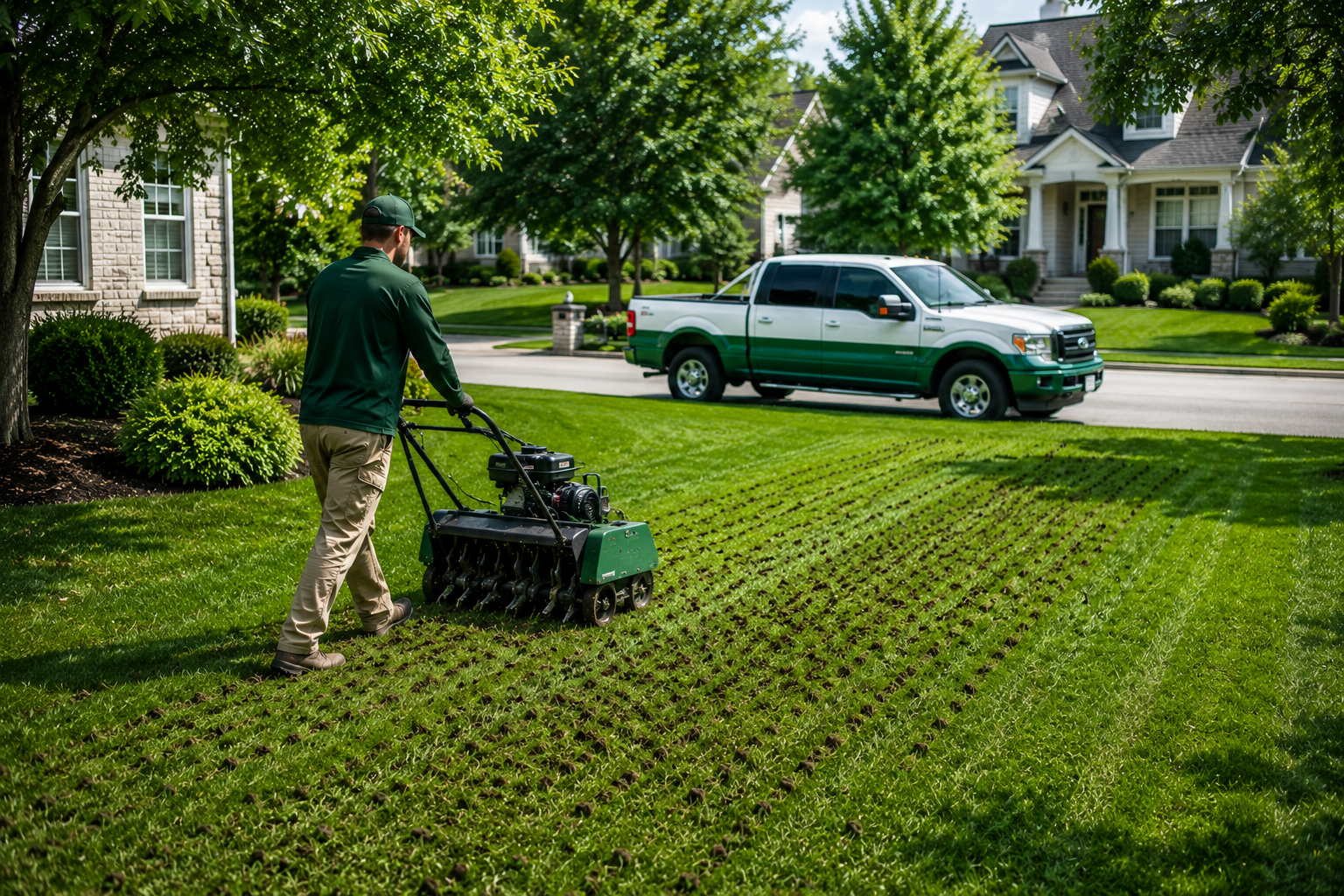
After aeration, small holes and soil plugs will be visible throughout the lawn. Leave the plugs in place—they break down naturally and return soil to the turf. The lawn may look temporarily disrupted, but normal mowing and watering can continue according to the instructions provided after service. If aeration is combined with overseeding, we’ll also provide the watering guidance needed to help the new seed establish.
Why Johnson County Lawns Need Aeration
Many lawns throughout Johnson County are built on dense clay soils. While clay holds nutrients well, it also becomes compacted much faster than sandy soils.
Combined with hot Kansas summers, frequent mowing, and heavy foot traffic, compacted soil can leave your lawn struggling to absorb the nutrients and moisture it needs.
Many Johnson County lawns benefit from annual core aeration, which opens compacted soil and gives grass the opportunity to build a stronger root system.

Aeration + Overseeding = Better Results
Core aeration creates thousands of openings in the soil, making it the perfect time to introduce new grass seed.
When combined with overseeding, aeration helps:
Fill in thin or bare areas
Increase lawn density
Improve color and appearance
Reduce future weed pressure
Introduce newer, more resilient grass varieties
This combination is one of the best investments you can make in the long-term health of your lawn.
Frequently Asked Questions
-
No. The small soil plugs left behind naturally decompose within a few weeks and actually help improve soil health.
-
Most Johnson County lawns benefit from core aeration once per year.
-
Yes. Once the soil plugs have dried, you can mow normally.
-
We offer Lawn care programs that include
Grub Prevention & Control
Liquid Aerationscription
-
Yes. Watering after aeration helps the lawn recover and encourages stronger root development.
-
For cool-season grasses common throughout Johnson County—including tall fescue and Kentucky bluegrass—the ideal time to aerate is in the fall.
-
Core aeration is the process of removing small plugs of soil throughout your lawn using specialized equipment.
Unlike spike aeration, which simply pokes holes into the ground, core aeration physically removes soil plugs to relieve compaction and create space for roots to expand.
The soil plugs naturally break down over the following weeks, returning valuable organic matter back into your lawn.