Lawn Overseeding in Johnson County, KS
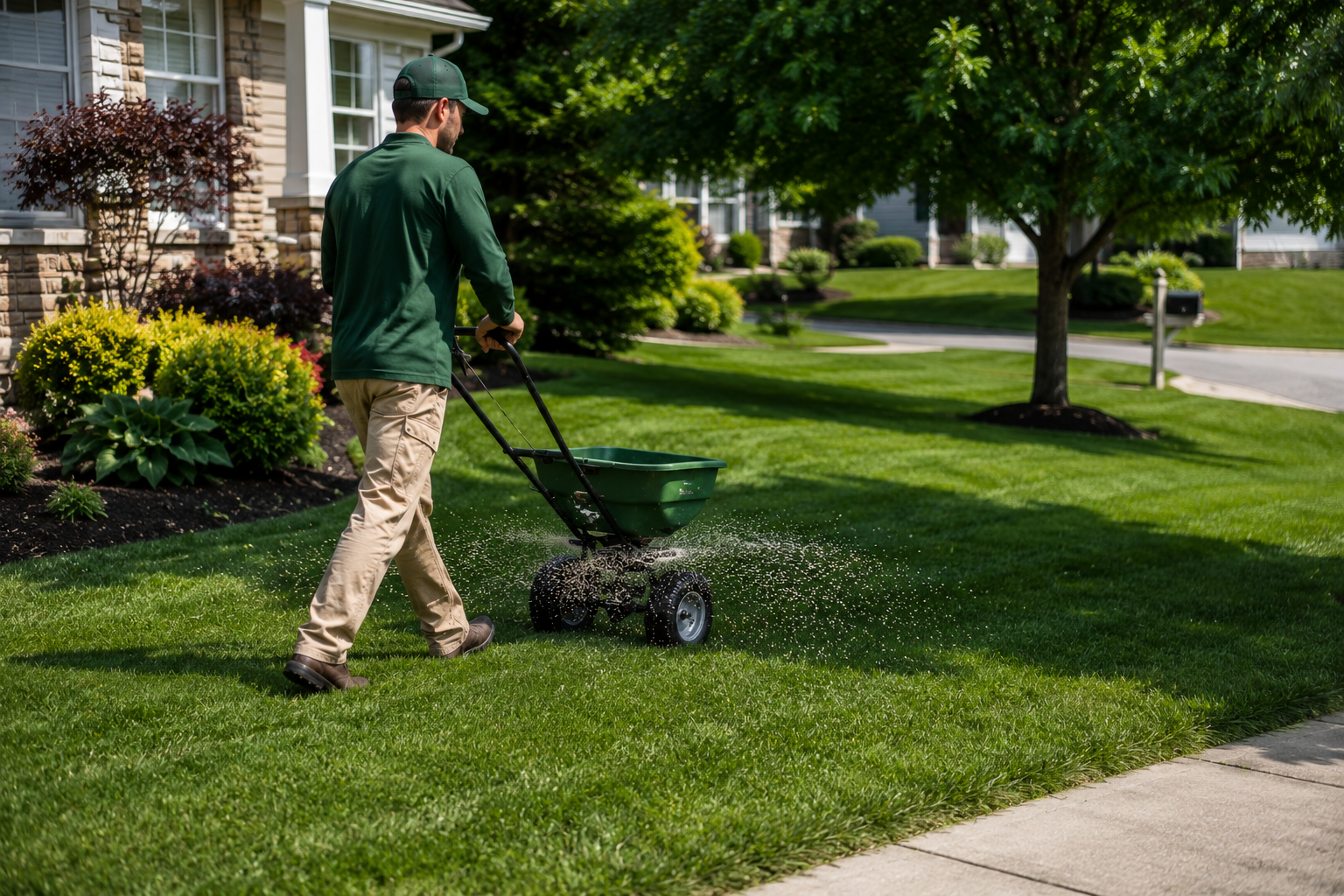
Overseeding introduces new grass seed into your existing lawn, helping fill in thin areas, improve overall density, and create a greener, healthier lawn.

Thicken Your Lawn Without Starting Over
TRANSFORM YOUR LAWN TODAY
FOR THE BEST EXPERIENCE, GIVE US A CALL

Year-Round Lawn Care Programs

Why Johnson County Lawns Benefit from Overseeding
Shawnee & Lenexa lawns face a lot throughout the year.
Hot summers, clay soils, heavy foot traffic, and seasonal weather can leave turf thin and stressed. Even healthy lawns naturally lose grass plants over time.
Overseeding replenishes your lawn by introducing new grass plants that help restore density and improve long-term health.
The thicker your lawn becomes, the better it can naturally resist weeds and tolerate drought.
Benefits of Overseeding
✔ Thickens thin or patchy lawns
✔ Fills in bare spots
✔ Improves lawn color and appearance
✔ Increases resistance to weeds
✔ Helps replace aging or damaged grass
✔ Improves drought tolerance
✔ Creates a softer, more uniform lawn
✔ Introduces newer, improved grass varieties
Why Overseeding Is Included in Our Premium Lawn Care Program
Overseeding delivers better results when new grass is supported by healthy soil and consistent seasonal lawn care. That’s why overseeding is included in our Premium Lawn Care Program alongside annual core aeration.
Fills thin and bare areas with new grass
Introduces improved grass varieties
Increases turf density and color
Helps established lawns resist weeds
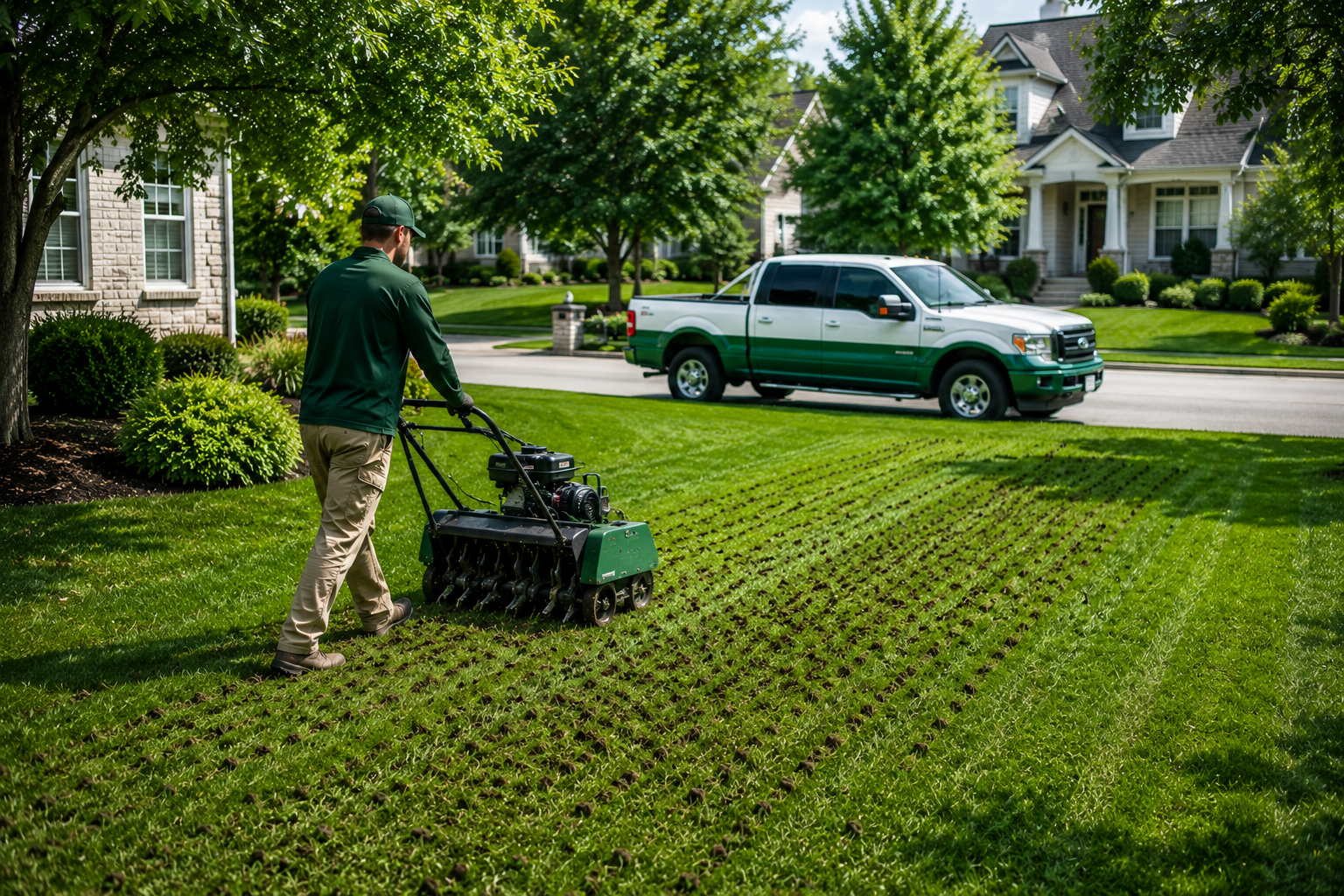
Works with aeration to improve seed-to-soil contact
Supports stronger, healthier growth before summer
Together, aeration, overseeding, fertilization, and weed control create a thicker, greener lawn with longer-lasting results.
Fall Is the Best Time to Overseed
For cool-season grasses like tall fescue and Kentucky bluegrass, fall provides ideal growing conditions.
Cooler temperatures, warmer soil, and increased moisture allow new grass seedlings to establish quickly without competing against extreme summer heat.
Fall overseeding also gives new grass several months to develop before the following summer.
What to Expect After Overseeding
After overseeding, consistent watering is essential while the new grass establishes.
Keep the seeded areas consistently moist without creating puddles
Avoid heavy foot traffic during germination
Wait to mow until the new grass reaches approximately 3–4 inches
Use sharp mower blades and avoid removing more than one-third of the grass height
Follow the watering and care instructions provided after service
Most lawns begin showing new growth within several weeks, although germination time depends on the grass variety, temperature, moisture, and lawn conditions.
Frequently Asked Questions
-
Overseeding is popular in Johnson County ks and is the process of spreading premium grass seed into an existing lawn without tearing up or replacing your current turf.
Instead of starting from scratch, overseeding thickens your lawn by introducing new, healthy grass plants that blend naturally with your existing lawn.
The result is a fuller, healthier lawn with improved color, density, and durability.
-
Cooler temperatures, warmer soil, and increased moisture allow new grass seedlings to establish quickly without competing against extreme summer heat.
Fall overseeding also gives new grass several months to develop before the following summer.
-
You may benefit from overseeding if your lawn has:
Thin or sparse grass
Bare patches
Heavy foot traffic
Areas damaged by drought
Declining turf density
Older lawns that have lost vigor
Weed-prone areas
Our technicians can evaluate your lawn and determine whether overseeding is the right solution.
-
We offer Lawn care programs that include
Grub Prevention & Control
Liquid Aeration
-
Most cool-season grasses begin germinating within 7–21 days, depending on weather, soil temperatures, and watering.
-
Most Johnson County lawns benefit from overseeding every year depending on lawn condition and goals.
-
Yes. Overseeding introduces new grass plants that increase turf density and create a fuller lawn over time.